How to Select the Right Metal Electrode for Industrial Applications
Electrode selection usually goes unnoticed when a weld holds. It only comes into focus when something goes wrong. A joint cracks during cooling. Penetration varies across a long seam. A weld clears inspection but fails early in service.
When you trace those problems back, the cause is often simple. The electrode wasn’t right for the job.
Choosing a metal electrode isn’t about memorising classifications or defaulting to what’s been used for years. It’s about understanding how welding behaves when conditions are less than perfect. Different materials, awkward positions, variable power, and real service loads all change how an electrode performs.
Let’s look at this the way fabrication and maintenance teams actually experience it.
Why Electrode Selection Has a Direct Impact on Weld Life
In industrial work, a weld isn’t judged by appearance alone. It’s expected to carry a load, handle stress, and survive long after the job is signed off.
The electrode influences:
- How stable the arc remains over long runs.
- Whether fusion stays consistent from start to finish.
- The final mechanical properties of the joint.
- How forgiving the weld is when parameters drift slightly.
When the electrode doesn’t suit the application, familiar problems show up:
- Uneven penetration across joints.
- Excessive spatter and cleanup time.
- Cracking during cooling or under service loads.
- Rejections that could have been avoided.
Getting the electrode right eliminates many of these issues before welding even begins.
Start With the Base Metal, Always
Every good weld decision starts with the base material. Mild steel, alloy steel, stainless steel, cast iron, and non-ferrous metals all respond differently to heat and filler composition. An electrode that performs well on one can cause serious defects on another.
What matters most is understanding:
- The chemical composition of the base metal.
- The required strength and toughness.
- How sensitive the material is to heat input.
When documentation isn’t available, practical checks still help:
- A coarse, grainy fracture often points to cast materials.
- Magnetic response usually indicates carbon or alloy steels.
- Grinding sparks can hint at carbon content.
- A chisel test gives a quick sense of hardness.
Used together, these methods allow welders to make informed choices even in the field.
Tensile Strength Matching Is About Control
There’s a tendency to assume that higher strength electrodes automatically produce better welds. In practice, overmatching tensile strength can reduce ductility and increase cracking risk, especially where vibration or thermal cycling is involved.
A better approach is balance.
Match the electrode’s minimum tensile strength to that of the base metal. In stick electrodes, the first two digits of the AWS classification indicate tensile strength. An E6011 electrode, for instance, deposits weld metal with a minimum tensile strength of 60,000 psi, which suits steels in that range.
The right electrode:
- Matches the base metal’s strength requirements.
- Retains sufficient toughness.
- Performs consistently under real operating conditions.
In industrial welding, controlled performance beats extreme numbers every time.
Power Source Compatibility Can’t Be an Afterthought
Electrodes are designed to work with specific power conditions. Some run on AC, others on DC, and polarity requirements vary.
Before selecting an electrode, confirm:
- AC or DC compatibility.
- Polarity requirements.
- The recommended current range.
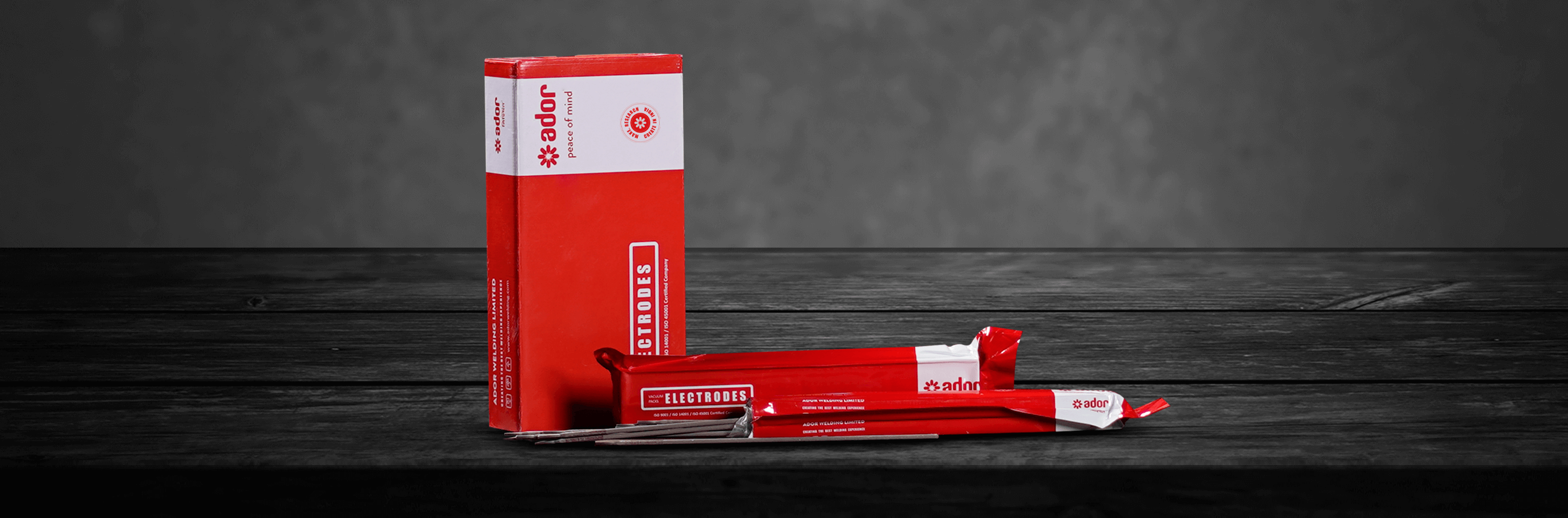
Modern packaging clearly lists this information, but it still gets overlooked. Electrodes that tolerate normal power fluctuations are especially valuable on sites where conditions aren’t perfectly stable.
Thickness, Joint Design, and Fit-Up Change Everything
Material thickness plays a major role in how an electrode behaves.
Low-hydrogen arc welding electrodes with good ductility are particularly useful for welding thick sections because they minimize the risk of cracking caused by residual stresses.
Electrodes with AWS suffix numbers 15, 16, or 18 are often used for this purpose.
As for very thin materials, smaller diameter, softer welded arcs will help to prevent the possibility of burning through, so 6013-type electrodes are often the best choice in these applications.
In addition, maintenance and repair work adds a layer of complexity. Typically, components will already be worn, contaminated, or heat-affected as a result of earlier service, so low-heat-input electrodes can be instrumental in this category — limiting dilution and minimizing the potential for further damage to the base material.
Welding Position Isn’t Just an Operator Issue
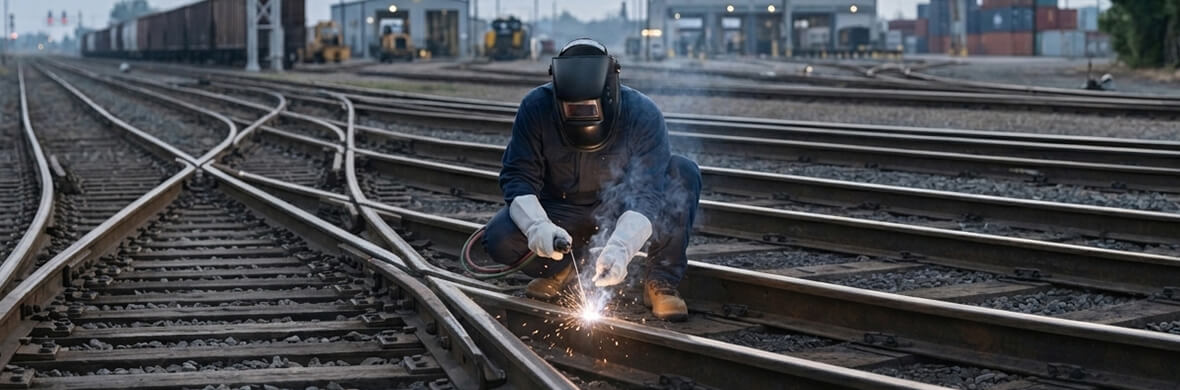
Not all welds are made flat and comfortable. Vertical, overhead, and confined joints are common in industrial environments.
Electrode selection must account for:
- Welding position.
- Slag freezing rate.
- Puddle control.
Electrodes designed for all-position welding help maintain bead shape and reduce fatigue when gravity works against the welder.
Coating Type Shapes Arc Behaviour and Weld Quality
The electrode coating plays a larger role than many realise. It affects arc stability, slag formation, hydrogen control, and ease of use.
- Rutile-coated electrodes are known for smooth arcs and easy slag removal.
- Low-hydrogen electrodes are essential for critical joints where crack resistance matters.
Choosing the right coating simplifies welding instead of adding unnecessary variables.
Service Conditions Decide Whether a Weld Truly Succeeds
A weld’s real test begins after fabrication. Heat, corrosion, pressure, impact, and cyclic loading all place different demands on the joint.
Before finalising electrode selection, consider:
- Operating temperature and environment.
- Fatigue and shock loading.
- Wear mechanisms during service.
For applications like pressure vessels or boilers, welding procedures often specify exact electrode types. Clean joint preparation and proper electrode storage are just as important in achieving the expected result.
Final Word
Selecting a metal electrode isn’t about ticking boxes on a datasheet. It’s about understanding how welding behaves when conditions are imperfect and production pressures are real.
If electrodes are created based on a sound understanding of the practicalities of fabrication and produced consistently, then welds will be predictable, rather than reactive.
Reliable manufacturers such as Ador Welding provide complete solutions for manual metal arc welding with a full range of low-heat input electrodes like LH Alloys. These technologies are particularly valuable in maintenance and repair work, where extending component life matters more than short-term fixes.
That’s where electrode selection stops being a background decision and starts becoming a reliability strategy.