What Is the Role and Types of Metal Electrodes in Welding
In industry, welding is rarely done for just one reason. Sometimes you’re building something new, exactly as per the drawing. Other times, you’re trying to bring a worn or broken component back to life and keep a plant running. The electrode you choose plays a very different role in each case.
To really understand metal electrodes, you first need to understand the two main ways they are used in practice:
- Fabrication welding
- Maintenance and repair welding
Everything else flows from that distinction.
Fabrication Welding vs Maintenance & Repair Welding
Fabrication Welding
Fabrication welding is done on new components. Plates, pipes, and structures are welded exactly as per design and specification. The base material is known. The joint design is defined. Welding parameters are planned in advance.
In this environment:
- The chemical composition of the base metal is known
- Joint preparation is proper and repeatable
- Welding is usually done in the downhand position
- Heat input is controlled and predictable
Because of this, electrodes used for fabrication are typically conventional welding rods. They are selected to meet the minimum mechanical and metallurgical requirements specified by design codes. The welding engineer chooses an electrode that fits the drawing, the standard, and the application. Nothing more is expected from it.
Maintenance and Repair Welding
Maintenance and repair welding is a completely different situation. Here, welding is done on components that are already in service or have failed.
In most repair jobs:
- The exact base metal composition may not be known
- Components are old, fatigued, or contaminated
- Cracks, wear, and distortion are common
- Welding is done on-site, often in awkward positions
Standard fabrication electrodes are usually too generic for this kind of work. That’s why M&R welding electrodes are designed differently. They are typically low heat input electrodes with richer alloy chemistry, created to handle uncertainty and restore performance.
In repair welding, the goal is not just to join metal. It is to extend working life, often beyond what the original design allowed.
Why Electrode Requirements Change Between Fabrication and Repair
Base Material Composition
In fabrication, everything is known. You know the steel grade, chemistry, and mechanical properties, so selecting a matching electrode is straightforward.
In repair welding, the base material may be unknown or mixed. Electrodes should be designed to allow welding on both black steel and cast iron or dissimilar materials with a minimum possibility of cracking.
Condition of the Component
Fabrication welding is done on clean, new material.
Repair welding is carried out on components that may be worn, heat-affected, oil-soaked, or oxidised. Electrodes used here need a stronger deoxidising ability and tougher deposited metal to compensate for these conditions.
Joint Preparation
In fabrication, joint preparation is controlled and precise.
In repair work, ideal joint preparation is often not possible due to space limitations or time pressure. The electrode must compensate through better penetration and stronger weld metal, even when preparation is less than perfect.
Welding Position
Fabrication shops aim to weld in the flat or downhand position because it gives the best weld quality.
Repair welding rarely offers that luxury. Most jobs are done vertically, overhead, or in confined spaces. That’s why repair electrodes are designed for all-position welding.
Working Life Expectations
In fabrication, working life is important, but failure does not usually stop an entire plant.
In repair welding, reliability is critical. A repaired component is expected to run without repeated breakdowns. Extended service life becomes the main priority.
Reinforcement Requirements
Fabricated components follow drawings and generally do not require additional reinforcement.
Building up, overlay, and hard facing are common techniques to strengthen worn areas and protect against further wear when repair welding is performed.
Time Pressure
Fabrication welding is planned and scheduled.
Repair welding usually happens during breakdowns. Time matters. Electrodes that can be used without pre-heating or post-weld heat treatment allow faster turnaround with reliable results.
Types of Metal Electrodes Used in Industry
Across fabrication and repair work, most industrial welding rods fall into four broad categories.
Welding Rods for Steels
These electrodes are used for welding:
- Carbon steels
- Low and high alloy steels
- Manganese steels
- Stainless steels
- Nickel-based alloys
They are used both for joining and for build-up, depending on the application.
Welding Rods for Cast Iron
Due to its high carbon content, cast iron is very hard to weld due to its brittle nature. Typically, repair welding of cast iron is done with nickel-based welding rods to absorb the stresses caused by shrinking during the cooling process and, therefore, reduce the chance of cracking due to stress during the cooling process.
Welding Rods for Non-Ferrous Alloys
These electrodes are used for welding:
- Aluminium and its alloys
- Copper and copper alloys
- Brass and bronze
They are formulated to manage high thermal conductivity and oxidation issues common with non-ferrous metals.
Hardfacing Welding Rods
Hardfacing electrodes are not used for joining. They are used to protect or rebuild surfaces exposed to wear.
All of these hardfacing electrodes are intended to serve as a barrier against all of the major industrial wear processes, including:
- friction,
- abrasion,
- impact,
- erosion,
- corrosion,
- cavitation, and
- heat.
Hardfacing plays a key role in extending component life in cement, mining, power, steel, and heavy engineering industries.
Ador’s Role in Industrial Welding
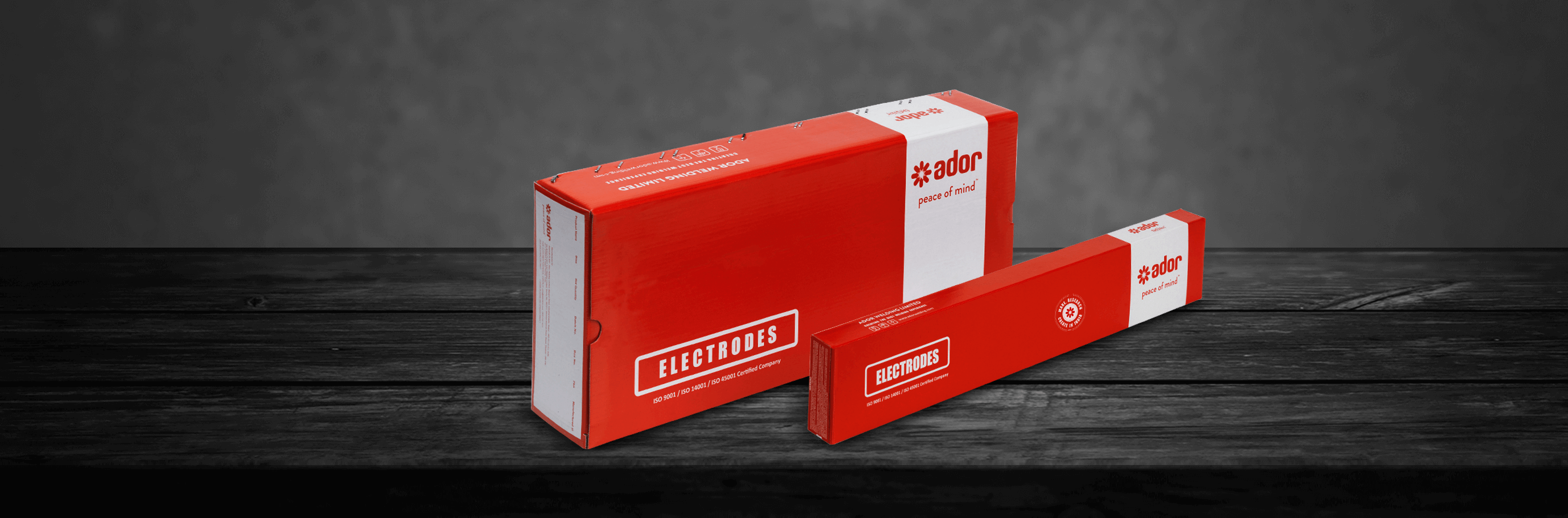
Ador supports both fabrication and maintenance needs through the manufacture and supply of a wide range of manual metal welding electrodes. This includes specially developed low heat input electrodes (LH Alloys) designed for demanding repair, hardfacing, and life-extension applications where conventional electrodes are not enough.
Final Thought
Metal electrodes are not interchangeable items pulled from a shelf. Their role changes depending on whether you are fabricating something new or repairing something critical.
Once this distinction is clear, electrode selection becomes logical. Fabrication welding focuses on meeting specifications. Maintenance and repair welding focuses on reliability and life. When electrodes are chosen with this understanding, welding becomes predictable, durable, and fit for real industrial conditions.