A Simple Guide to Welding Steel
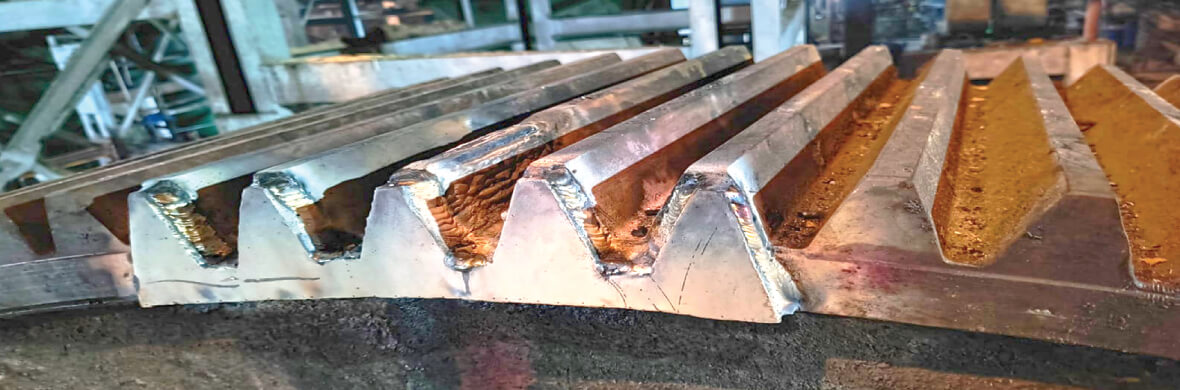
Steel is one of the most engineered, modified, and relied-upon materials in industrial history.
What makes steel so valuable is not just strength. It is adaptability. Steel can be moulded, pressed, machined, welded & woven to suit different purposes.
Technically speaking, steel is an iron-based alloy containing up to 1.7% carbon. That carbon content may sound small, but it controls everything — hardness, strength, brittleness, and most importantly for us, weldability.
The higher the carbon, the stronger and harder the steel can become. As strength increases, weldability usually decreases. That balance defines how we approach welding.
How Steel Is Made
Understanding welding starts with understanding what you’re welding. Steel production takes place in three major stages.
1. Iron Making
Iron ore, coke, and limestone are fed into a blast furnace. The chemical reactions inside the furnace take the oxygen out of the ore and create molten iron.
The molten iron contains roughly 4% of carbon. This level of carbon is much too high to use for construction. The iron is strong due to its high carbon content; however, it is also brittle.
2. Steel Making
The next step in this process is converting the molten iron into refined steel. The molten iron is transferred to a basic oxygen furnace (BOF). Oxygen will be blown through the molten iron to reduce the excess level of carbon.
Depending on the required grade, alloying elements will be added to the refined steel. The refined steel will then be cast into billets, blooms, or slabs. This final chemistry is what will determine how the steel behaves under the welding arc.
3. Shaping
Once solidified, steel is rolled in mills into plates, sheets, bars, rods, channels, beams, and other sections.
By the time it reaches a fabrication shop, the steel already carries its metallurgical signature. Welding must respect that signature.
What’s Inside Steel?
Plain carbon steel typically contains:
- Carbon: up to 1.7%
- Silicon: up to 0.6%
- Manganese: up to 1.65%
- Sulphur: up to 0.35%
- Phosphorous: up to 0.13%
Each element influences performance during welding.
1. Carbon
Carbon increases hardness and strength. It forms structures like pearlite and martensite. But during welding, high carbon promotes hard and brittle zones in the heat-affected area. This is where cracks usually happen.
2. Manganese
Manganese improves strength and helps neutralise sulphur by forming manganese sulphide. It also supports deoxidation during steelmaking. In welding, adequate manganese helps maintain weld metal toughness.
3. Silicon
Silicon acts as a deoxidiser and improves resistance to scaling at elevated temperatures.
4. Phosphorous
Phosphorus reduces ductility and toughness. It is generally considered an undesirable impurity in structural steels.
5. Sulphur
Sulphur lowers impact resistance but improves machinability in controlled amounts. Excess sulphur can cause hot cracking.
The takeaway is simple: composition dictates weldability. There is no shortcut around metallurgy.
Types of Steel and How They Behave During Welding
Not all steels respond the same way to heat.
1. Low Carbon Steel
Carbon up to 0.3%
This is the easiest steel to weld. It has:
- Good ductility.
- Moderate strength.
- Excellent weldability.
In most cases, no preheat is required. Standard welding procedures are sufficient. That’s why low-carbon steel dominates structural fabrication. That is low-carbon steel is most preferred for welding.
2. Medium Carbon Steel
Carbon between 0.3% and 0.6%. Strength and hardness increase here. So does crack sensitivity.
Welding precautions include:
- Preheating around 200–250°C.
- Using low-hydrogen electrodes.
- Controlled heat input.
- Slow cooling.
Preheating reduces thermal shock and slows down cooling. That prevents the formation of brittle martensite in the heat-affected zone.
3. High Carbon Steel
Carbon from 0.6% to 1.71%
These steels are designed for hardness and wear resistance. They respond well to heat treatment but poorly to welding.
Common problems include:
- High cracking tendency.
- Hard heat-affected zones.
- Residual stresses.
Recommended practice:
- Preheat around 300°C.
- Maintain interpass temperature close to 300°C.
- Slow cooling.
- Post-weld heat treatment.
- Stress relieving where necessary.
Alloy Steels
Steel alloys are made using metals in addition to carbon, which changes the overall properties and performance of the material. These additions modify strength, toughness, corrosion resistance, or temperature capability.
They are classified as:
1. Low Alloy Steels
Alloying elements less than 10%.
These steels provide improved mechanical properties without drastically reducing weldability.
Preheat may be required depending on carbon equivalent, but requirements are usually moderate.
Hydrogen control becomes critical in thicker sections.
2. High Alloy Steels
Alloying elements greater than 10%, such as nickel, chromium, or manganese.
These steels often have high carbon equivalents and increased hardenability.
Improper procedure can result in martensitic transformation and cracking.
Welding practice generally involves:
- Preheat around 300°C.
- Controlled interpass temperature.
- Slow cooling.
Special High Alloy Steels
Some categories deserve specific attention.
1. Austenitic Manganese Steel
These steels contain more than 10% manganese and high carbon. Often referred to as Hadfield steel, they are known for work hardening under impact.
During welding:
- Avoid preheat.
- Keep heat input low.
- Cool quickly.
If the temperature rises above 175°C, hard carbides may form, reducing toughness.
2. Stainless Steel
With a minimum 11.5% chromium, stainless steel resists corrosion through the formation of a protective oxide layer.
Nickel improves toughness at both low and elevated temperatures.
During welding:
- No preheat required in most cases.
- Use low current.
- Prefer stringer beads.
- Avoid prolonged exposure above 500°C to prevent sensitisation.
Maintaining corrosion resistance is as important as achieving mechanical strength.
3. Tool Steel
Tool steels contain high carbon and alloying elements such as tungsten, molybdenum, chromium, and cobalt. They are used in dies, shear blades, and cutting tools.
These steels can withstand temperatures up to 550°C, but welding them is challenging.
During welding:
- Preheat to around 350°C.
- Controlled heat input.
- Slow cooling.
- Post-weld heat treatment is required.
Tool steel repair requires patience. Rushing it leads to cracking or hardness loss.
Ador’s Welding Solutions for Steel
Fabrication and maintenance environments demand reliability. Different steels require different approaches, and a single consumable cannot serve every application.
At Ador, an exclusive range of LH Welding Electrodes, TIG rods & MIG wires has been designed and developed to weld all categories of steels used across industries.
From structural fabrication to maintenance and repair welding, Ador offers application-specific solutions that align with metallurgical demands.
FAQs
1) What are the most common methods used for welding steel?
The most common methods are MIG (GMAW), TIG (GTAW), Stick (SMAW), and Flux-Cored Arc Welding (FCAW), each suited to different thicknesses, environments, and precision needs.
2) What types of steel can be welded?
Most carbon steels and many low-alloy steels weld easily, while stainless steels and high-carbon steels require controlled heat input and proper filler selection.
3) What is the best welding method for beginners?
MIG welding is generally best for beginners because it is easier to control, cleaner, and more forgiving compared to Stick or TIG.
4) How do you inspect the quality of a steel weld?
Weld quality is inspected through visual checks for cracks, porosity, and undercut, and in critical applications, through non-destructive tests like ultrasonic or dye penetrant testing.