Brazing Flux: Types, Applications, and Selection Guide for Industrial Use
Brazing Flux
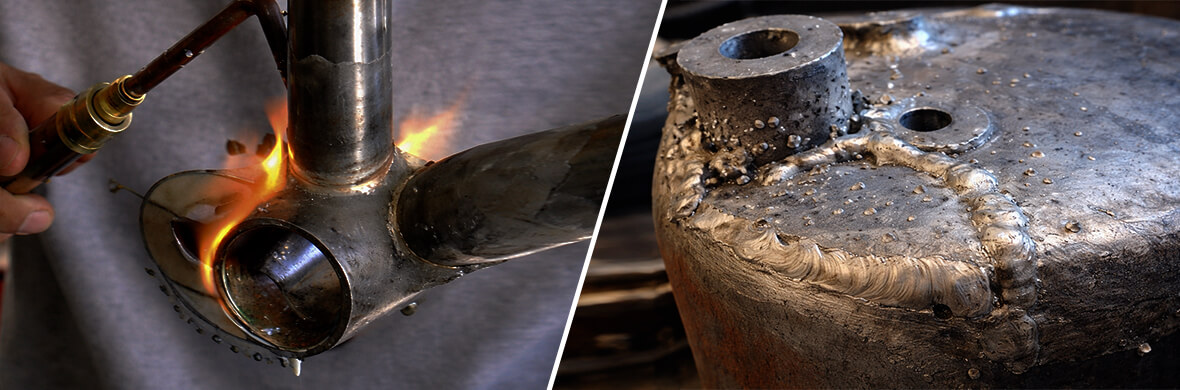
Brazing flux is a key component of the brazing process.
Brazing is a metal-bonding process in which the base metal is heated, and oxygen reacts with the surface to form oxides that prevent the filler metal from bonding.
In many cases, the brazing flux indicates the appropriate bonding temperature, and additionally dissolves surface oxides, protects the metal from further oxidation during heating, and reduces surface tension so the molten filler flows evenly into the joint.
Without it, the brazing process becomes difficult in most applications. So, even a well-prepared joint can come out weak, porous, or partially bonded, regardless of technique. Choosing the right flux comes down to the base metal, the brazing temperature, and what the application demands.
Types of Brazing Flux
1. Borax-Based Flux
A general-purpose option for steels, copper, and brass. Available in powder and paste, it covers a wide temperature range and is the standard choice for most carbon and mild steel brazing work.
2. White Flux (FB3-A/FB3-F)
The go-to for silver brazing. Works with silver-bearing fillers on:
- Steel
- Copper and copper alloys
- Stainless steel
It turns liquid at brazing temperature, which gives a clear visual indication that the joint is ready for filler.
3. Black Flux
A boron-modified version of white flux that stays active longer at higher temperatures. Used when:
- Brazing stainless steel or nickel alloys
- Working with induction brazing processes
- Dealing with heavier oxide build-up that white flux cannot shift
4. Aluminium Brazing Flux (FB1-A)
Aluminium forms a dense oxide layer that standard flux cannot break down. Aluminium-specific flux is formulated to dissolve that layer so the filler metal can reach and bond with the base metal. Using the wrong flux on aluminium will result in no bonding, regardless of how well the joint is prepared.
5. Fluoride-Based Flux
Preferred where minimal post-braze residue is required, these are common in refrigeration, HVAC, and precision assemblies. Handles oxide protection and filler flow well, but requires careful handling and cleanup.
Where Industrial Brazing Flux Gets Used
Brazed joints are found across most industrial sectors. Applications where flux selection directly affects joint performance include:
- stHVAC and refrigeration: Copper tube-and-fitting assemblies that must be completely leak-free.
- Automotive: Heat exchangers, cooling circuits, and fuel system components.
- Electrical assemblies: Contacts and connections where heat management is critical.
- Tooling and heavy engineering: Joints under sustained load, vibration, and stress.
- Food-grade and pharmaceutical equipment: Clean joints with easy, complete flux removal.
- Shipbuilding and marine systems: Joints exposed to corrosion and pressure over long service.
Maintenance and repair work adds more variables. Components already in service may be oxidised, oil-contaminated, or made from materials that aren’t clearly identified. In these situations, a flux with strong deoxidising ability and a wide active temperature range gives the technician better control over the outcome.
The heating method matters too. Torch, furnace, and induction brazing each behave differently. Flux that burns off too early under concentrated induction heat leaves the metal exposed at the wrong moment.
Selecting the Right Brazing Flux
Four factors drive the selection:
- Base metal: Aluminium requires aluminium-specific flux. Stainless steel and nickel alloys need black flux. Copper, brass, and mild steel are well covered by white flux.
- Brazing temperature range: Every flux has an active window. Outside that range, it either hasn’t activated yet or has already burned off; both cause the same bonding problems.
- Heating method and cycle time: Longer torch cycles and fast induction cycles place different demands on flux stability. Match the flux to the process, not just the material.
- Post-braze cleanup requirements: In hygiene-sensitive or food-grade applications, residue must be fully removed. Some flux types clean up far more easily than others.
Removing Flux Residue After Brazing
Flux residue left on a joint is corrosive and must be removed after brazing:
- Quench the joint while still warm to loosen the residue.
- Scrubbing with warm water and a wire brush is sufficient for most standard flux types.
- Use mechanical removal or grit blasting for residue that has baked on hard.
- Inspect the joint area carefully before completion, especially in moisture-prone environments.
Residue left in damp conditions will corrode the joint and surrounding material over time.
Ador’s Brazing Solutions
Brazing applications across fabrication and maintenance require a compatible flux and filler system. Ador offers both:
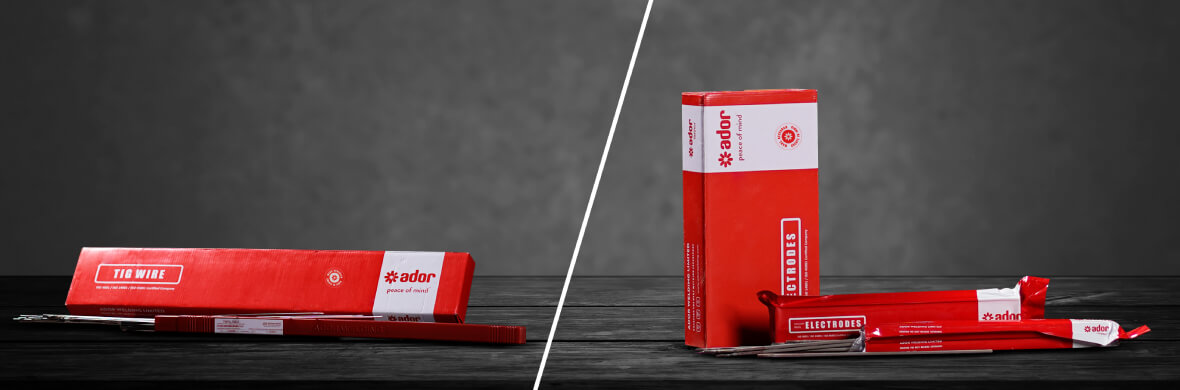
- Silbraze F (FB3-F): A silver brazing flux designed to work with all silver brazing bare rods, supporting consistent filler flow and bonding on steel, copper, and silver joints.
- Albraze A (FB1-A): A dedicated aluminium brazing flux formulated to break down aluminium’s oxide layer and allow proper filler bonding.
Both are developed to work with Ador’s range of bare and coated brazing rods, giving fabrication and maintenance teams a fully compatible solution for industrial brazing applications.
FAQs
1. What is brazing flux, and why is it used?
Metal surfaces oxidise when heated, and those oxides prevent the filler from bonding properly. Flux breaks down that layer and stops it from reforming, so the filler flows and bonds the way it should.
2. What are the different types of brazing flux?
The main types are borax-based flux, white flux (FB3), black flux, aluminium brazing flux (FB1), and fluoride-based flux, each suited to different base metals and temperature ranges.
3. How do you select the right brazing flux?
Start with the base metal, then match the flux to the brazing temperature range and heating method. Also consider how the residue needs to be handled after the job is done.
4. Is brazing flux required for all brazing processes?
Not in every case. Copper-to-copper joints using phosphorus-copper fillers don’t need additional flux.
5. What industries commonly use brazing flux?
HVAC, refrigeration, automotive, shipbuilding, electrical manufacturing, food-grade equipment, and heavy engineering maintenance are among the most common. Anywhere a strong, leak-free metal joint is required.
6. How is brazing flux removed after the process?
Quench the joint while it’s still warm, then scrub with warm water and a wire brush. For residue that’s baked on harder, mechanical removal or grit blasting gets the job done.
7. Can brazing flux be used for aluminium?
Standard flux won’t work on aluminium because the oxide layer it forms is too dense. A dedicated aluminium brazing flux like Ador’s Albraze A (FB1-A) is needed for the filler to bond correctly.